Complete Family Health

Health management is often misunderstood in most apps today. They usually focus only on surface-level tracking — steps walked, heart rate, calories burned, or gym workouts. But real health is much deeper than that. It is not just about activity… it is about history, context, and continuity.

As a person managing family life, I often think — how do we truly understand our health journey over time? It’s not only about today’s fitness reading, but everything that has shaped our health so far.

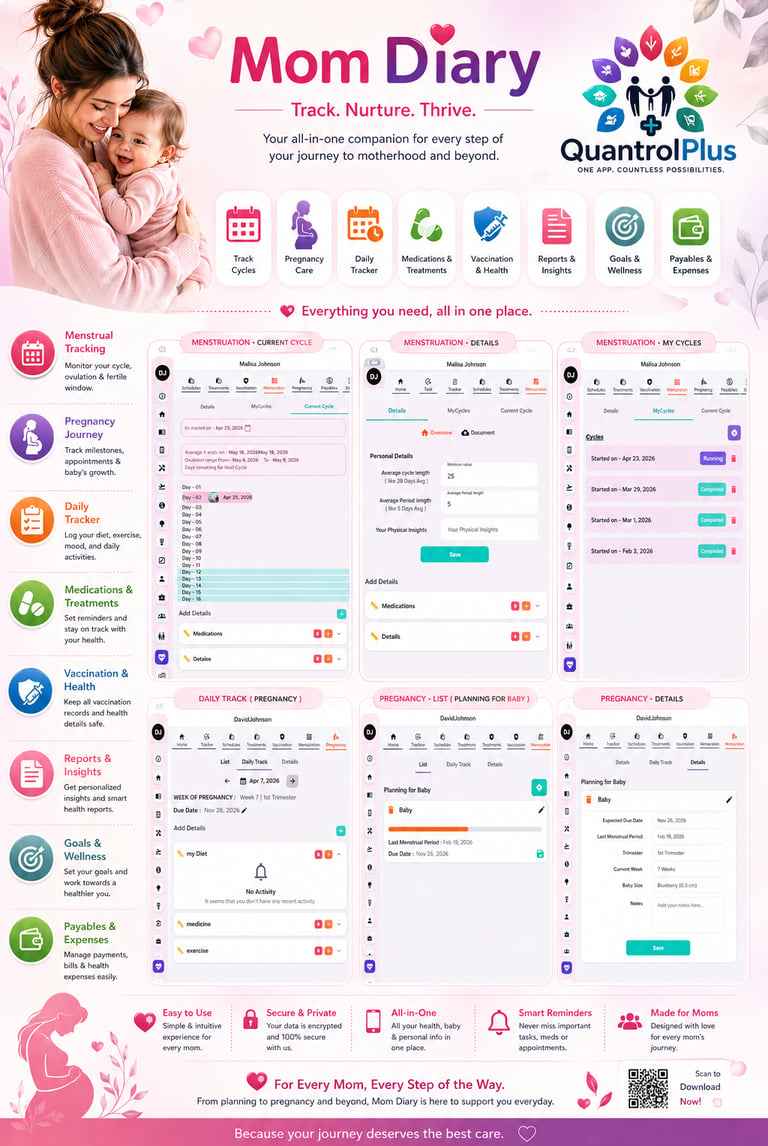
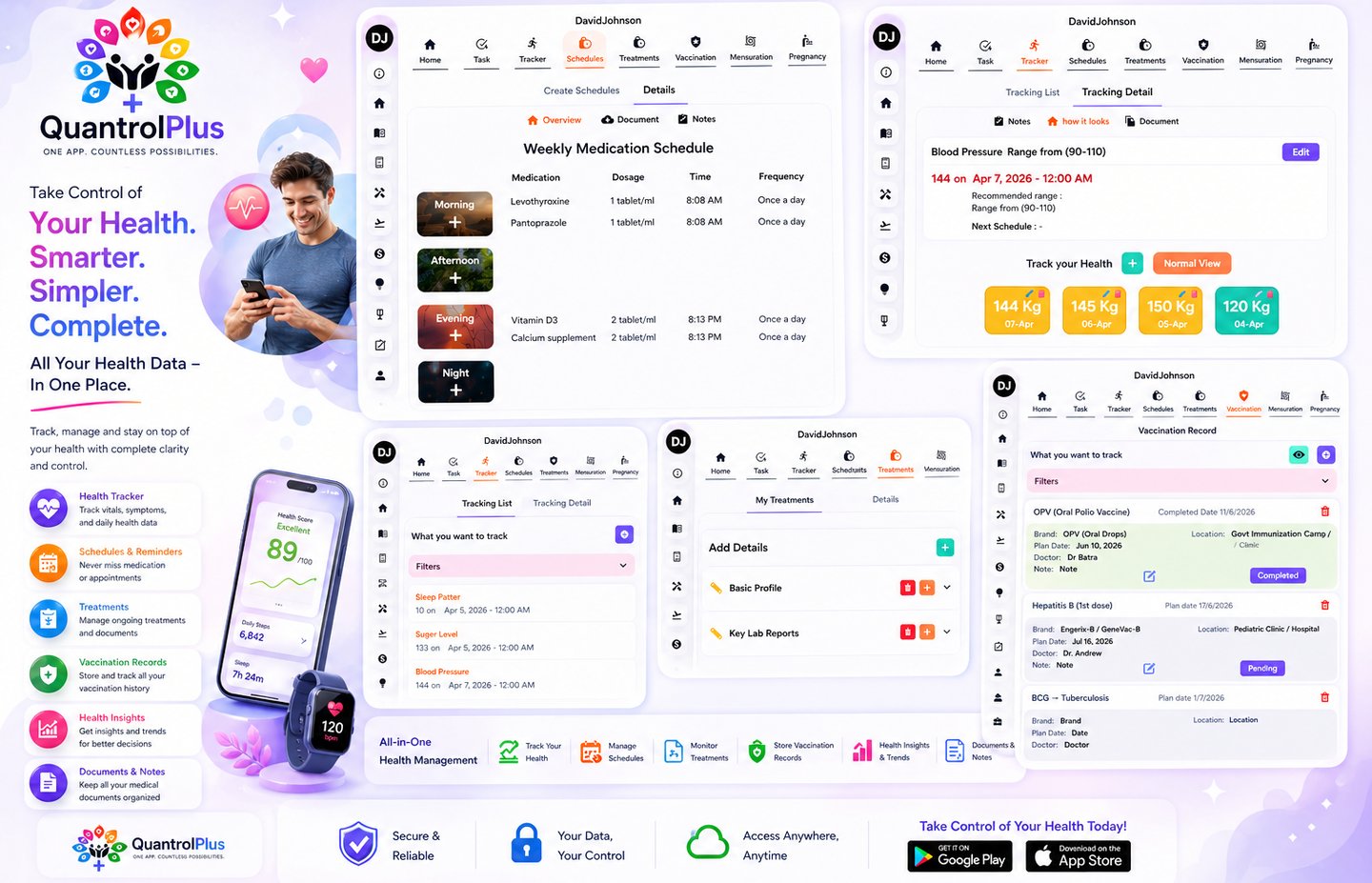
A complete health system should include treatment history — surgeries, medications, diagnoses, follow-ups, and recovery progress, all recorded in one place so nothing is lost or forgotten.

It should also track vaccinations — for children, adults, and seniors — including schedules, completed doses, and upcoming boosters.

Ongoing treatments are equally important — chronic conditions, therapies, prescriptions, and care plans, along with progress tracking and medical notes.

For mothers, health becomes even more detailed — tracking menstruation cycles, pregnancy phases, trimester-wise monitoring, doctor visits, reports, and postnatal care. Every stage needs structured, continuous tracking for safety and awareness.

And health is not limited to one person. It extends across the entire family — children, parents, grandparents — each with their own history, needs, and care routines. Even pets have their own health records, vaccinations, and treatments that must be maintained.

What we really need is a complete health management system — not just fitness tracking, but a lifelong health record. A system that connects history, ongoing care, preventive tracking, and future planning — so health is not reactive, but truly understood and managed for everyone we care about.

Manage and Track Accounts

Account management is something we use every day — but rarely think about deeply. As a working individual and managing a family, I often wonder… how many accounts do I actually have? Bank accounts, credit cards, loans, digital wallets — everything is scattered. Where is my money really sitting? How much is available, and how much is already committed?

Without proper account management, it’s easy to lose track. Missed payments, hidden charges, unused subscriptions, or even idle money sitting in the wrong place. It’s not just about tracking balances — it’s about understanding the flow of money across all accounts, knowing what’s active, what’s due, and what needs attention.

What I really need is one clear, organized view — where every account is connected, every balance is visible, and every commitment is tracked. A place that brings everything together, helps avoid surprises, improves financial discipline, and gives full control over my money. Because managing accounts isn’t just a habit… it’s the foundation of smart financial living.

Loan Management

As a family — and also as a working parent — I often wonder if there's a better way to track all our travel plans. Where are we going? What tickets have been booked? What activities are planned? How much will we be spending? Can we plan everything together in advance? It gets even more complex when I travel for business — I need to track every flight, hotel, and expense for reporting. I also want to preserve those memories — where we went, what we did, where we stayed. It would be so helpful to have one place where everything can be recorded, organized, and easily reviewed — both for family vacations and professional trips.

Health is not just tracking few parameters.. its more..

Payables

Payables are often the most overlooked part of financial management — yet they quietly control our cash flow. As a working individual managing family, business, and projects, I often wonder… what all do I actually need to pay, and when? Subscriptions, utility bills, loan EMIs, credit card dues, insurance premiums, salaries — they’re all scattered across different places.

Without a proper system, it’s easy to miss due dates, incur penalties, or lose track of commitments. Some payments are personal, some belong to business or specific projects — but they all impact the same financial picture. I want to group them clearly, track them separately, and still see the overall impact.

What I really need is a single place where every payable is recorded with full detail — amount, due date, frequency, category, linked account, and related documents. A system where I can also attach tasks, track payment history, set reminders, and monitor upcoming obligations.

Because managing payables isn’t just about paying bills — it’s about planning ahead, avoiding surprises, maintaining discipline, and ensuring everything runs smoothly across personal life, business, and projects.

Family gathers in a park during autumn
A person putting a house key into a wallet

Complete Finance

Managing finance is not just about tracking money — it’s about understanding the complete financial story of your life.

When I think about real financial control, it goes far beyond simple income and expense tracking. It includes everything that shapes financial health — payables, receivables, credits, loans, transactions, documents, and future commitments.

What I truly need is a system where every financial element is connected and clearly visible:

Manage your payables — bills, subscriptions, EMIs, insurance, salaries, and all recurring commitments, with full details like due dates, categories, linked accounts, and payment history.

Manage your receivables — income from salary, business payments, reimbursements, investments, or any money expected, along with status tracking and timelines.

Track your credits and loans — credit cards, personal loans, lines of credit, and repayments, so I always know what is outstanding and what is cleared.

Organize all transactions — every inflow and outflow categorized, searchable, and linked to purpose, project, or account for complete transparency.

Maintain documents — statements, invoices, insurance papers, loan agreements, and tax records, all attached to the right financial entry for easy access and verification.

Plan spending — set budgets, forecast future expenses, and control spending before it becomes a problem, not after.

And finally, see a complete financial overview — not just numbers, but insights like profit and loss, cash flow, assets, liabilities, and net worth — a true balance sheet of personal and professional life.

Because finance is not just about tracking money… it’s about clarity, control, and confidence in every decision I make.

doctor doing surgery
a woman holding a baby in a hospital room

Asset Management

Asset management is one of those things we only realize the importance of when something goes wrong — a property issue, a vehicle breakdown, a missing document, or simply not knowing the real value of what we own.

As a working individual managing both personal and business life, I often think… how well do I actually know my assets? My home, vehicles, equipment, investments, electronics, and other tangible items — all of them carry value, responsibility, and maintenance needs.

What I really need is a structured way to manage everything I own — not just list it, but truly understand it:

Each asset should be clearly categorized — personal, business, or project-based — so I know exactly where it belongs and how it is used.

I should be able to track current value — whether it is appreciating or depreciating over time, and what factors are impacting its worth.

Every asset should have a full transaction history — purchase cost, upgrades, repairs, insurance claims, or any related financial movement.

Maintenance and servicing records are equally important — when was it last serviced, what was done, what is due next, and what it might cost in the future.

Documents should be attached and organized — invoices, warranties, ownership papers, insurance policies, and compliance records — all easily accessible when needed.

Even photos and condition tracking matter — to visually record the state of an asset over time and understand its lifecycle.

Because asset management is not just about ownership — it’s about protection, optimization, and long-term value creation. It gives clarity on what I truly own, how it is performing, and how well I am maintaining my wealth over time.

woman holding baby beside man smiling
A person putting a house key into a wallet